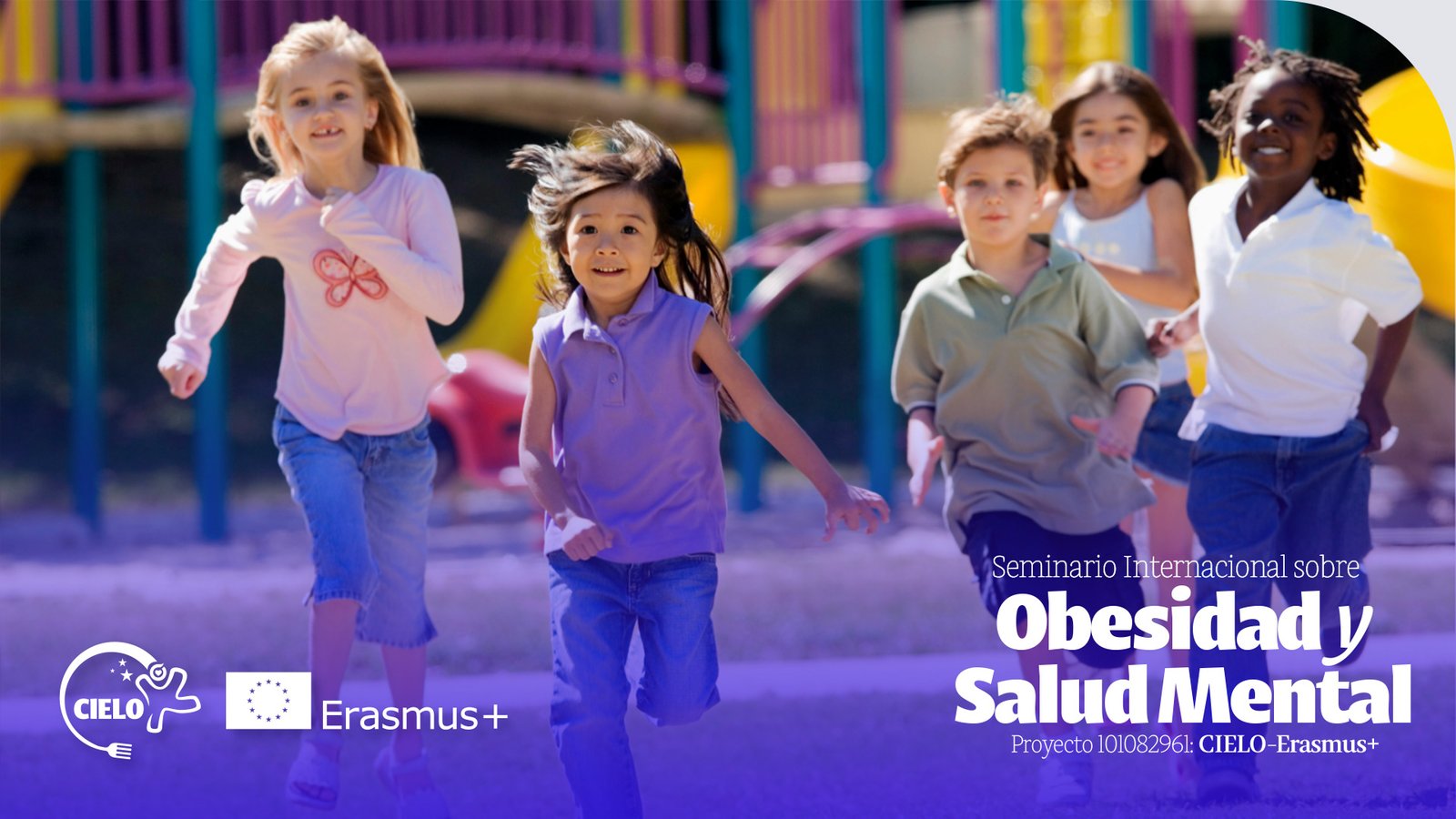
We addressed child health care from a human rights and public policy framework in Chile, Costa Rica, and Mexico. We presented our online course and eToolkit app on childhood obesity prevention and mental health promotion
By: Ángela Cisneros | Universidad La Salle Noroeste
The global prevalence of excess malnutrition has tripled over the past 30 years (1990–2022), and in Latin America alone, approximately 46 million children and adolescents live with overweight or obesity. Faced with this crisis, the second day of the CIELO International Seminar (January 28, 2026) shifted the focus to the structural determinants of obesity, analyzing it as a syndemic and a human rights issue. On this day, we moved from theory to action: the CIELO Project’s online postgraduate course and eToolkit app—its core deliverables—were presented, alongside a comparative dialogue on the direction of public policies for childhood obesity prevention in Chile, Costa Rica, and Mexico.
Obesity: A systemic and structural failure, not an individual one
The three keynote conferences of the day agreed that obesity results from structural conditions, not individual or family decisions.
During her talk, “Obesity in the 21st Century: A Syndemic Between Lifestyles and Disease,” Dr. Marcia Erazo Bahamondes presented a causal model explaining why this phenomenon must be understood as a syndemic: a multifactorial interaction among social, biological, and environmental determinants that synergistically impacts population health. She broke down four interconnected levels of risk: from individual behaviors and family patterns (such as lack of breastfeeding or the belief that “a chubby child is a healthy child”) to environments that normalize ultra-processed foods, and structural frameworks that shape fiscal policies, labeling regulations, and urban safety. The expert warned that if these structural determinants are not transformed, today’s generation of children could be the first in decades to have a shorter life expectancy than their parents due to premature metabolic diseases.
Along the same lines, Dr. Lilia Pedraza Zamora highlighted an inescapable reality: as long as the environment prioritizes unhealthy options, demanding “healthy choices” from families is a structural injustice. In her session, “The Right to Healthy and Sustainable Diets: An Urgent Agenda for Preventing Overweight and Obesity in Childhood,” she argued that obesity is the consequence of failed systems.
“Can children exercise their right to a healthy diet if the environment prevents it? That is, if drinking water is unavailable, if the cheapest option is ultra-processed food, if advertising invades every space. We are not talking about individual choices. We are talking about environments, about systems that are failing,” she emphasized.
The researcher demonstrated how barriers such as food insecurity, aggressive marketing, and poverty condition health outcomes even from gestation. She cited the case of Mexico, where high obesity rates among people of reproductive age and low exclusive breastfeeding rates increase metabolic risks. However, she noted that responsibility continues to be placed solely on the individual level, ignoring that a healthy and sustainable diet is impossible if the global food system is already broken.
Master’s degree holder Ana Larrañaga Flota closed the block with “The Role of the State in Caring for Children and Adolescents in Health and Nutrition.” The researcher addressed how the Convention on the Rights of the Child (CRC) and Mexico’s recent General Law on Adequate and Sustainable Food establish clear obligations for States. She highlighted the best interests of the child as a cross-cutting criterion but warned that its realization remains a challenge: “From signing an agreement to its actual implementation, there is a long road. This is precisely where academia and civil society become fundamental actors to provide oversight and serve as a voice of accountability,” she stated.
She systematized the State’s role into six interdependent obligations, ranging from respecting rights and protecting childhood from misleading advertising, to guaranteeing safe environments, preventing violations, sanctioning non-compliance, and repairing harm through recovery programs. Thus, the three speakers reminded us that changing habits will have limited impact unless food environments are transformed first and the State is held accountable for fulfilling rights—a perspective that the Erasmus+ CIELO Project integrates into its core deliverables.
Presentation of the CIELO Course and eToolkit App
The CIELO online postgraduate course and eToolkit app are the tangible results of two years of collaborative work. During the seminar, we presented these tools, designed by the 12 consortium universities to train health and education professionals in childhood obesity prevention and psychological well-being promotion.
Maika Kummel (Turku University of Applied Sciences, Finland) and Sinead Martínez Ruiz (Universidad La Salle Pachuca, Mexico) coordinated the presentation of the course, which is available free of charge and asynchronously on the CIELO portal. The program is structured around three interdisciplinary modules: childhood obesity prevention, mental health promotion, and their intersection. This structure enables a progressive learning path with certification per module and a comprehensive certificate upon completion.
Dr. José Adrián Villanueva (Universidad La Salle Oaxaca, Mexico) presented the eToolkit app as the “practical companion” to the CIELO online course. This mobile-first application, currently in its final development phase, includes tools for mindfulness, emotional tracking, interactive meal planning, and educational gamification. Designed to function with low connectivity, it aims to bridge the gap between academic theory and daily intervention in clinics, schools, and communities.
Public Policies: Comparative Dialogue and Pending Challenges
The final activity of the day was the panel discussion “Public Policies for the Prevention of Childhood Obesity in Mexico, Costa Rica, and Chile,” featuring Dr. Alejandra Contreras Manzano (Mexico) and Dr. Jessica Arbaiza Fuentealba (Chile).
Both experts agreed that effective public policies—such as front-of-package warning labels, bans on advertising directed at children, and free access to drinking water—require multisectoral coordination and are grounded in academic evidence. However, they also highlighted shared critical challenges: fragmented funding, discontinuity of initiatives due to changes in administration, and insufficient evaluation of the real impact of policies, which tend to focus on coverage rather than prevalence reduction or territorial equity.
The conclusion of the second day is clear: childhood obesity and its relationship with mental health constitute a phenomenon that goes far beyond what we “choose” to eat. To transform this reality, the Erasmus+ CIELO Project trains professionals with practical tools and a comprehensive perspective, firmly rooted in the lived realities of children and adolescents.